
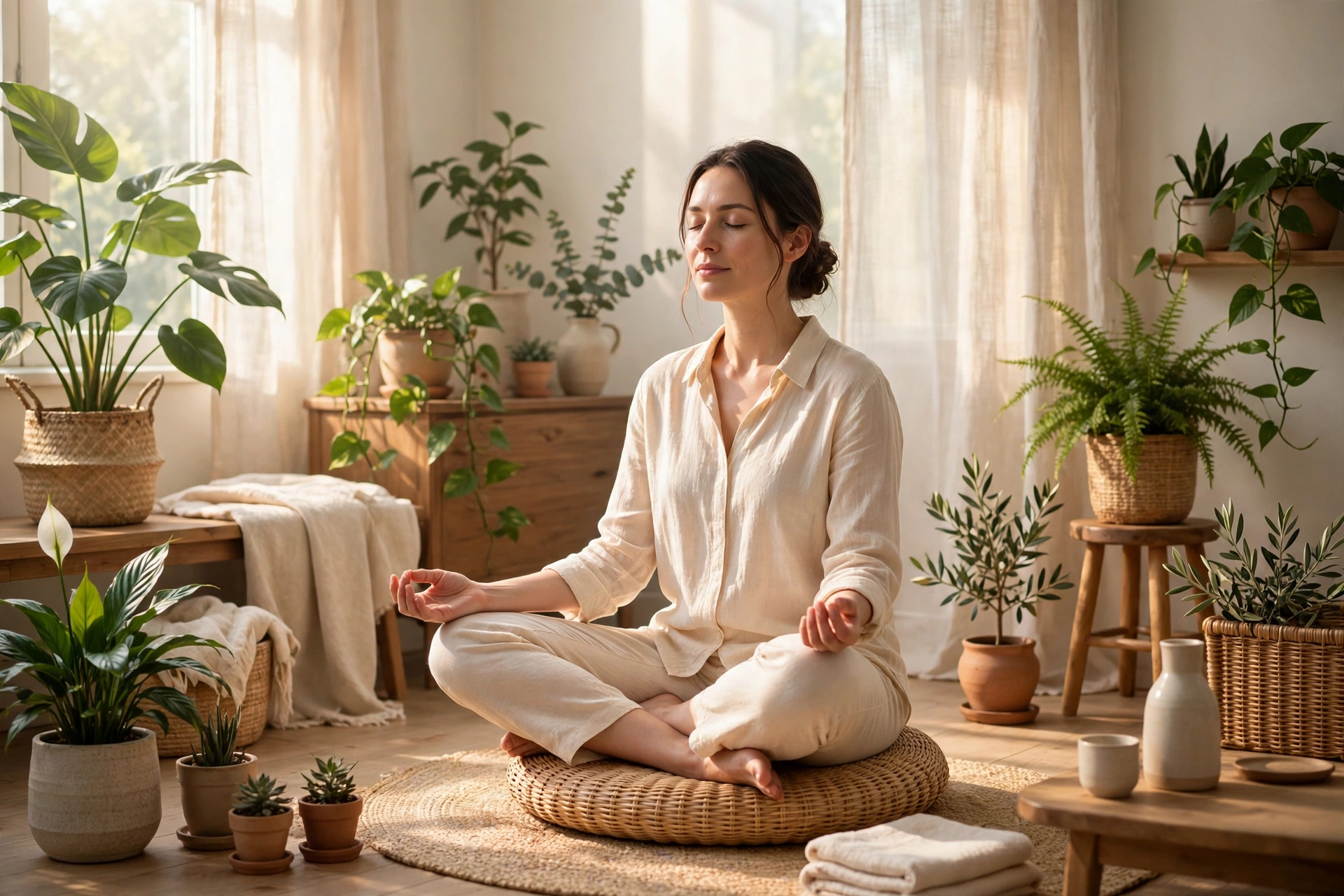
Some days, stress builds up so quietly that you hardly notice it. A tight deadline, a bad night’s sleep, a message you forgot to answer — and suddenly your shoulders feel heavy and your mind will not stop racing.
If that sounds familiar, you are not alone. The good news is that meditation for stress relief can be simple, short, and practical. You do not need an hour of silence or years of practice. You can do it at your desk, in your bedroom, or on a slow walk. This guide covers seven techniques that real people actually stick with.
What Meditation Actually Does When You Feel Stressed
Meditation is not about emptying your mind. That is a common misunderstanding, and it puts many people off before they start.
Think of it as training your attention. You give your mind one calm thing to focus on — your breath, a sound, a feeling in your body. When thoughts wander, and they will, you gently bring your attention back. That small act, repeated again and again, helps your body slow down.
Many people notice their breathing slows and worries feel less urgent. A warm cup of green tea can also become part of a quiet evening routine — see our guide on 7 Amazing Health Benefits of Drinking Green Tea Every Day at https://healthsy.org/7-amazing-health-benefits-of-drinking-green-tea-every-day/
1. Breathing Meditation for Stress Relief
Sit comfortably, place your feet on the ground, and let your shoulders drop. Breathe in slowly through your nose for about four counts, feeling your belly rise a little. Then breathe out slowly through your mouth for about six counts. That longer out-breath tells your body it is safe to relax.
Keep going for five minutes. When your mind drifts, do not scold yourself — just notice it and come back to the next breath.
2. Body Scan Meditation
Stress often lives in the body before we notice it in the mind. A body scan helps you find it and let it go, one area at a time.
Lie down or sit back and close your eyes if that feels okay. Move your attention slowly down from the top of your head — forehead, jaw, neck, shoulders, arms, chest, stomach, legs, and feet. At each spot, pause briefly. If your jaw is clenched, let it soften. Even a three-minute scan helps, especially at bedtime.
3. Guided Meditation for Stress Relief
Some people find silence hard at first. Their thoughts get louder the moment things go quiet. If that is you, guided meditation may be a better fit.
In a guided session, a calm voice talks you through the practice. It might ask you to picture a quiet place, focus on your breathing, or relax each part of your body in turn. You simply listen and follow along. Start with a free five-to-ten-minute session for stress or sleep. A short session you finish beats a long one you give up on.
4. Mindfulness Meditation
Mindfulness meditation is about paying attention to the present moment, without judging it. Sit quietly and notice what is happening right now: the chair under you, the sound of a fan outside, the rise and fall of your breath. You are not trying to change anything. You are just noticing.
Thoughts will come. That is normal. You might think about dinner, a bill, or something embarrassing you said years ago. When that happens, label it gently — “thinking” — and return to the present. This helps with anxiety in particular, because anxiety usually lives in the future. Mindfulness pulls you back to now, which is often far calmer than the story in your head.
5. Walking Meditation
Not everyone likes sitting still, especially when they feel restless. Walking meditation suits people who think better when they move.
Find a quiet path or a hallway at home and walk slowly — much slower than usual. Pay attention to each step: heel, then middle of your foot, then toes. If your mind wanders, bring it back to walking. Ten slow minutes can clear your head in a way scrolling never will.
6. Mantra Meditation
A mantra is a word or short phrase you repeat quietly to yourself. It gives your mind something steady to return to, which can be very calming when your thoughts feel scattered.
Choose something simple, like “calm” or “let go.” Sit comfortably, close your eyes, and repeat it slowly in time with your breath. If other thoughts pop up, let them pass and return to the mantra. After a few minutes, most people find their breathing slows and their body feels more relaxed.
7. Loving-Kindness Meditation
This one sounds a little unusual at first, but many people find it deeply comforting, especially on days when they feel frustrated or hard on themselves.
Sit quietly and think of someone you care about. Silently repeat kind wishes for them: “May you be happy. May you be healthy. May you feel safe.” After a minute, turn those same wishes towards yourself. It can feel awkward at first — that is normal. People often finish feeling softer and less tense.
How Long Should You Meditate, and How Often?
Start with five minutes a day. That is enough to learn the habit without it feeling like another chore. Sit down at the same time each day if you can — after breakfast, during a lunch break, or before bed.
After a week or two, try ten minutes. Many people find ten to fifteen minutes a day is a sweet spot. Consistency matters more than length — five minutes every day beats one long session a week.
Eating well helps too — see our Top 5 Easy Diet Plans for Beginners That Actually Work at https://healthsy.org/top-5-easy-diet-plans-for-beginners-that-actually-work/
Common Mistakes to Avoid
Most people do not fail because they are bad at it. They fail because they expect too much, too soon. First, expecting a completely quiet mind. Your brain is meant to think — meditation is about noticing thoughts and letting them pass.
Second, doing too much at once. Do not start with forty silent minutes on day one. Third, judging every session — some days feel calm, others fidgety, and both count. Finally, only meditating in a crisis. It helps most as part of your regular day.
FAQs About Meditation for Stress Relief
How quickly does meditation for stress relief work?
Some people feel calmer after a single five-minute session, especially with slow breathing. For most people, the bigger change comes with regular practice over a few weeks — they recover from stressful moments a little faster and do not stay wound up for as long.
Can meditation replace therapy or medical treatment for anxiety?
No. Meditation can be a helpful daily habit, and many people use it alongside other support, but it is not a replacement for professional help. If anxiety or stress is affecting your sleep, work, or relationships for a long time, talk to a healthcare professional.
What is the best time of day to meditate?
The best time is the time you will actually do it. Morning works well for many people because the day has not yet become busy. Evening works well for others, as a way to unwind. Try both, and choose the one that fits your life.
Do I need an app or a class to meditate?
No. A quiet room and a timer on your phone are enough. If you like guidance, a free app or a short guided video can make the first few sessions easier.
Conclusion
Stress will not disappear, and meditation will not fix everything. What it can do is give you a small pause in a busy day — a few minutes to breathe and choose how you respond, instead of reacting on autopilot.
Start with one technique. Breathing meditation is a good first step if you want something simple; guided meditation helps if silence feels hard. Try five minutes today, then again tomorrow. Over time, those small pauses add up, and a calm mind becomes easier to find.
If stress has been affecting your hair, see our guide on Best Vitamins You Need for Faster Hair Growth at https://healthsy.org/best-vitamins-you-need-for-faster-hair-growth/. Pick one technique, keep it simple, and give yourself permission to be a beginner.
Disclaimer: This article is for general wellness information only. It is not medical advice, and it is not a substitute for professional care. If stress is severe, persistent, or affecting your daily life, please consult a healthcare professional.