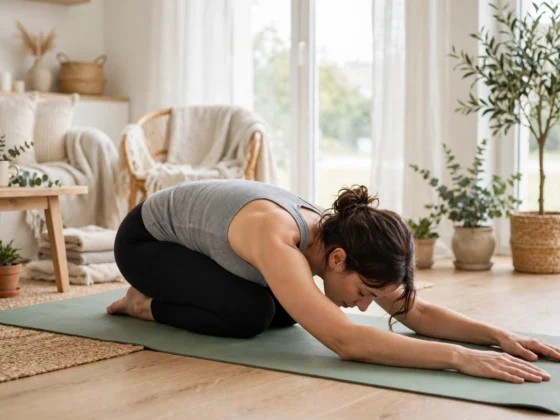
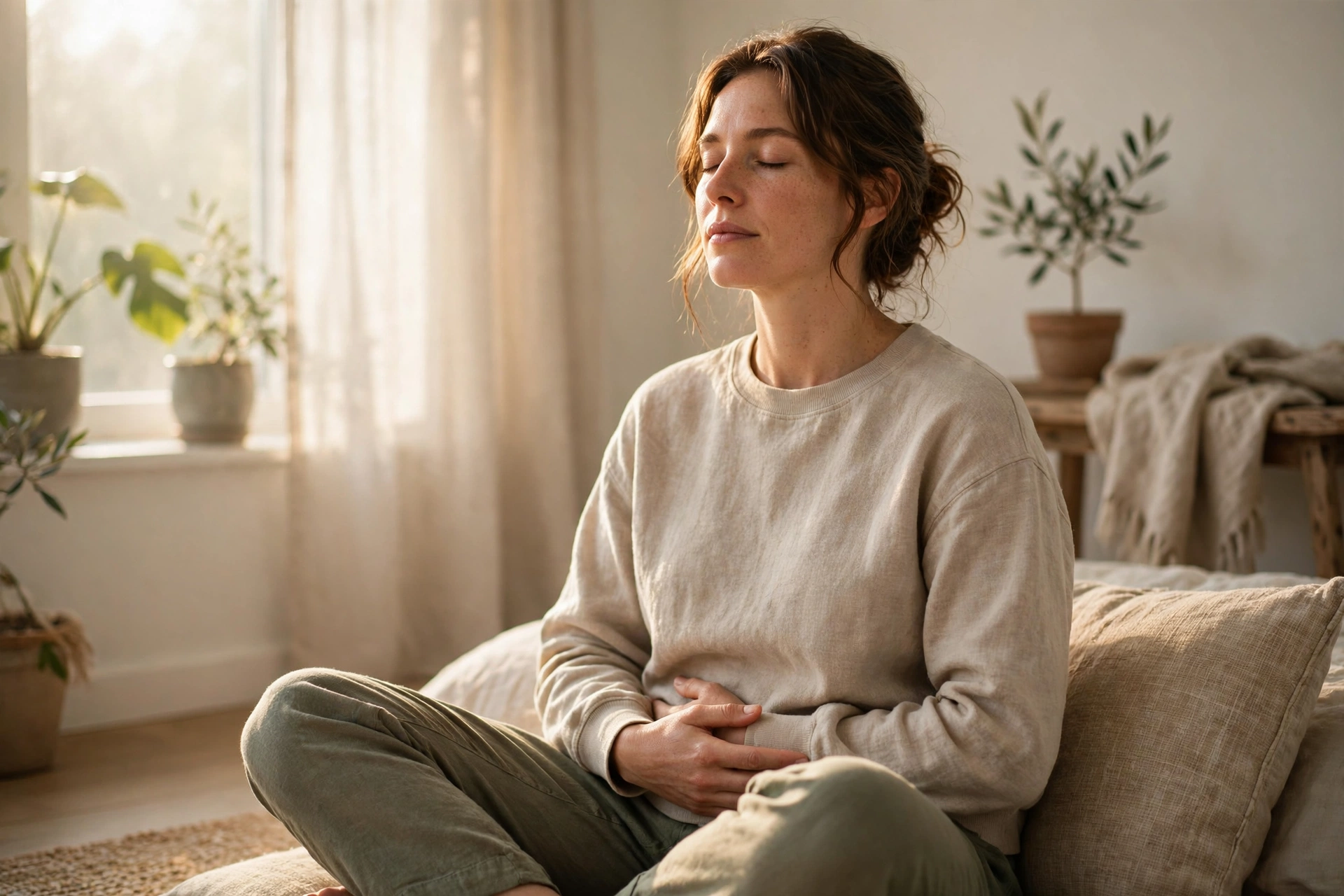
You do not need a quiet retreat, a special app, or any equipment to feel a little calmer. You just need a few minutes and your breath. Breathing exercises for relaxation are simple on purpose. They slow you down, give your mind something gentle to focus on, and help your body ease out of that tense, rushed feeling. Most of us breathe in a shallow, hurried way during the day, especially when we are stressed or tired. A few slow breaths can be a small reset — not a magic fix, just a practical way to pause.
1. Slow Belly Breathing
This is the simplest place to start. Instead of breathing high up in your chest, you let your belly rise and fall. Sit or lie down comfortably. Place one hand on your chest and one on your belly, just below your ribs. Breathe in slowly through your nose and notice your belly rising. Then breathe out slowly through your mouth, and feel your belly fall. Try a slow count of four in, and four out. Repeat for five to ten breaths.
2. Box Breathing
Box breathing has four equal parts, like the four sides of a box: breathe in, hold, breathe out, hold. Sit up straight and relax your shoulders. Breathe in through your nose for a slow count of four. Hold gently for four. Breathe out slowly through your mouth for four. Then hold again, with your lungs empty, for four. That is one round. Try four rounds to start. The holds should feel calm, not tight. If four counts feel too long, use three instead.
3. 4-7-8 Breathing
This one is often used at bedtime, because the long, slow breath out can feel very soothing. The numbers are the whole method: breathe in for four, hold for seven, breathe out for eight. Sit or lie down somewhere comfortable. Breathe in quietly through your nose for four. Hold for seven. Then breathe out slowly through your mouth for eight. Try four rounds at first. This can make some people feel lightheaded, so do not push through that feeling. If the counts feel too long, use a shorter pattern, like in for three, hold for four, and out for six.
4. Pursed-Lip Breathing
Here, you breathe in through your nose and breathe out slowly through pursed lips, as if gently blowing out a candle or cooling a hot drink. Relax your neck and shoulders. Breathe in through your nose for a count of two. Then purse your lips and breathe out slowly for a count of four. The breath out should take about twice as long as the breath in. Repeat for a few minutes. Keep the breath out soft and steady, and do not force the air out.
5. Extended Exhale Breathing
Sometimes the simplest trick is to make your breath out longer than your breath in. A longer exhale often feels more calming than a long inhale. Breathe in through your nose for a count of four. Then breathe out slowly through your mouth for a count of six. If six feels too long, try in for three and out for five. Do this for two to five minutes. Keep your breathing smooth, with no gasping or rushing.
6. Coherent Breathing
Coherent breathing is slow, even breathing with no pauses in between. You breathe in for about five seconds, then breathe out for about five seconds, in a smooth, steady flow. Sit comfortably with your back supported. Breathe in through your nose for a slow count of five. Without holding your breath, breathe out through your nose or mouth for a slow count of five. Keep the rhythm steady. Try it for three to five minutes. If five feels awkward, count to four or six instead. The point is the even pace, not the exact number.
7. Alternate Nostril Breathing
This one looks a little unusual, but many people find it relaxing once they get used to it. You breathe through one nostril at a time, using your thumb and one finger to gently close each side. Sit comfortably. Use your right thumb to gently close your right nostril, and breathe in slowly through your left nostril. Then close your left nostril with your ring finger, release your thumb, and breathe out slowly through your right nostril. Now breathe in through your right nostril, close it, release your left nostril, and breathe out through your left nostril. That is one full round. Try five rounds, breathing slowly and easily. If you have a blocked nose or a cold, skip this one. It is a nice way to slow down before bed — see our article on the 7 Amazing Health Benefits of Drinking Green Tea Every Day.
When to Use Them
Use these exercises before sleep, when your mind is still busy from the day. A few minutes of slow belly breathing or 4-7-8 breathing in bed can help you wind down. Use them before a stressful moment, too, like a presentation or a difficult phone call. They also help during a busy day. If your breathing has become fast and shallow, pause and take five slow breaths. You can also pair breathing with other calm habits. A short breathing exercise before meditation can help you settle in — see Meditation for Stress Relief.
Common Mistakes to Avoid
The most common mistake is trying too hard. Breathing exercises should feel gentle. If you are forcing deep breaths, holding your breath until you feel uncomfortable, or breathing so fast that you feel dizzy, slow down, shorten the counts, and breathe normally for a while. Another mistake is expecting instant results. Sometimes you will feel calmer right away, and sometimes you will not. That is normal. A few minutes a day, done regularly, is more helpful than one long session once in a while. Comfort comes first.
FAQs
How long should I do breathing exercises each day?
A few minutes is enough to start. Try two to five minutes, once or twice a day. Short and regular is better than long and rare.
Which breathing exercise is best for relaxation?
The best one is the one that feels comfortable for you. Slow belly breathing and extended exhale breathing are good starting points because they are simple.
Can I do breathing exercises lying down?
Yes. Lying down is a good position, especially before sleep. Sit up if you want to stay alert, for example before work or study, and lie down if you want to relax or fall asleep.
Is it normal to feel dizzy when doing breathing exercises?
Feeling a little lightheaded can happen, especially with longer holds or faster breathing. It is a sign to stop and breathe normally. Sit or lie down and wait until it passes. If dizziness happens often, talk to a healthcare professional first.
Conclusion
Breathing is something you do all day without thinking about it, but a few slow, careful breaths can turn it into a small moment of calm. Pick one exercise that sounds easy, try it for a few minutes, and notice how you feel.
Disclaimer: This article is for general wellness information only. It is not medical advice and is not a replacement for professional help. Breathing exercises are not a treatment for anxiety or any medical condition. If anxiety or breathing problems are severe or persistent, please consult a healthcare professional. If you feel dizzy at any point, stop the exercise and breathe normally.