If you feel stiff when you wake up or struggle to touch your toes, you are not alone. Most of us spend hours sitting and looking at screens, moving far less than our bodies were made to move. The good news is that flexibility can improve at any age, and you do not need to be naturally bendy or spend an hour a day to feel a difference.
These best stretches for flexibility are simple, gentle, and beginner-friendly. You can do them at home, without equipment, in about ten to fifteen minutes. The goal is not to force your body into a shape. It is to move a little more freely and feel a little less tight.
Why Flexibility Matters
Flexibility is about how easily your muscles and joints move through their normal range. When you are more flexible, everyday things tend to feel easier: bending down to tie your shoes, reaching for something on a high shelf, or getting up from the floor without feeling stiff.
A short stretch after a walk or workout can also ease that tight feeling in your legs and back. Many people find that stretching helps them slow down and relax, especially with slow, steady breathing. You do not need to chase a perfect split. A few minutes most days will do far more than one long, intense session once in a while.
How to Stretch Safely
Keep these simple safety tips in mind before you start. First, warm up: stretch after a short walk or a few minutes of gentle movement, when your muscles are warm. Move slowly, breathe normally, and never hold your breath. You should feel a gentle pull, not sharp pain, burning, or pinching. If it hurts, ease off straight away. Do not bounce, as bouncing can cause small muscle strains. Hold each stretch still for 20 to 30 seconds, and stretch both sides for the same amount of time. If you have an injury, joint pain, or a health condition, go gently and stop if anything feels wrong.
1. Neck Stretch
Sit or stand tall with your shoulders relaxed. Slowly drop your right ear toward your right shoulder and hold for 20 seconds. Repeat on the other side, then slowly roll your head in a small circle, first one way and then the other, for a few slow breaths each way.
2. Shoulder Rolls
Stand with your arms relaxed by your sides. Slowly roll both shoulders up, back, and down in a large circle. Do this five times, then reverse the direction for five more. This is a great stretch for a work break, because it loosens the shoulders and upper back without needing floor space.
3. Cross-Body Shoulder Stretch
Bring your right arm across your chest. Use your left hand to gently press your right arm closer to your body, just above the elbow. Hold for 20 to 30 seconds, breathing slowly. Repeat on the other side, keeping your shoulders down and relaxed.
4. Cat-Cow Stretch
Start on your hands and knees, with your hands under your shoulders and your knees under your hips. As you breathe in, let your belly drop toward the floor and lift your head and tailbone. As you breathe out, round your back toward the ceiling and tuck your chin toward your chest. Move slowly between the two positions for 30 seconds.
If you enjoy slow, flowing movements like this, you may also like these yoga poses for stress relief.
5. Child’s Pose
From your hands and knees, sit your hips back toward your heels and stretch your arms out in front of you. Rest your forehead on the floor or on a cushion if that feels more comfortable. Hold for 30 seconds while you breathe slowly. This is a restful stretch for the back, hips, and shoulders.
6. Standing Hamstring Stretch
Stand with your feet hip-width apart. Step your right foot a small step forward and keep that leg straight, with your heel on the floor and your toes pointing up. Bend your left knee slightly and hinge forward from your hips, placing your hands on your left thigh for support. Hold for 20 to 30 seconds, then switch legs.
7. Seated Forward Fold
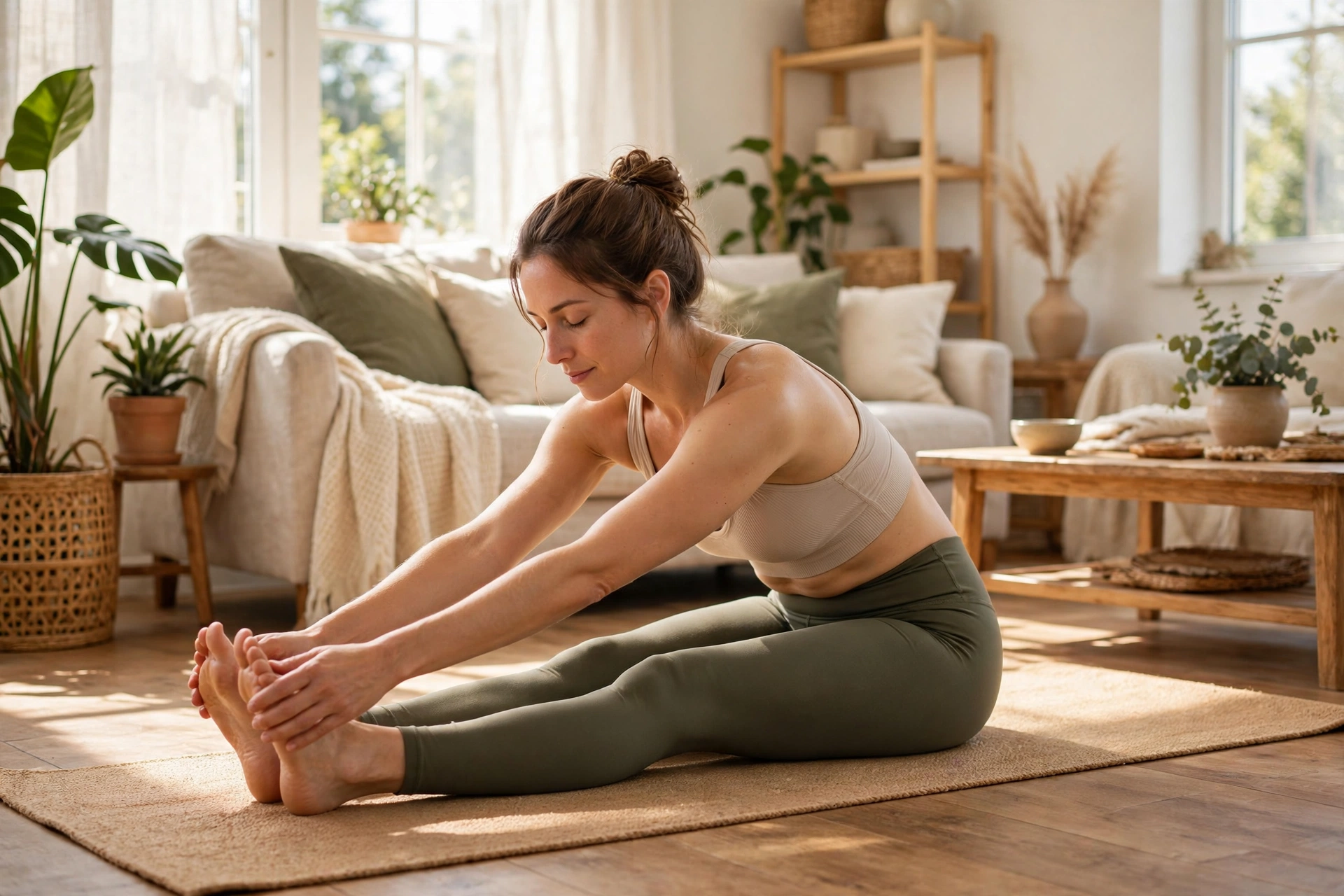
Sit on the floor with your legs straight out in front of you. Sit tall, breathe in, and as you breathe out, fold forward from your hips, reaching toward your feet. It does not matter how far you reach. Bend your knees a little if your hamstrings feel very tight. Hold for 20 to 30 seconds, then sit back up.
8. Butterfly Stretch
Sit on the floor and bring the soles of your feet together, letting your knees fall out to the sides. Hold your feet with your hands and sit tall. Gently press your knees toward the floor, but do not force them. Hold for 20 to 30 seconds.
9. Low Lunge Hip Stretch
Step your right foot forward into a lunge and lower your left knee to the floor. Keep your hands on the floor or on your front knee for balance. Gently shift your weight forward until you feel a stretch at the front of your left hip. Hold for 20 to 30 seconds, then switch sides.
10. Standing Quad Stretch
Stand tall and hold on to a chair or wall for balance if you need it. Bend your right knee and bring your right foot up behind you, holding the top of your foot with your right hand. Keep your knees close together and gently press your hips forward. Hold for 20 to 30 seconds, then switch legs.
A Simple 10-Minute Flexibility Routine
If you are not sure where to start, try this short routine three to five times a week: shoulder rolls and neck stretch, cross-body shoulder stretch, cat-cow, child’s pose, standing hamstring stretch, butterfly stretch, low lunge, seated forward fold, and standing quad stretch. Spend about a minute on each one.
Do the stretches in any order you like, and skip any that do not feel right for you. You can stretch in the morning to loosen up, after a walk, or in the evening to wind down. Pairing stretching with a short walk is an easy way to build the habit — if you want a simple place to start, read about the benefits of walking 30 minutes a day.
Frequently Asked Questions
How often should beginners stretch for flexibility?
Most beginners do well stretching three to five times a week for about ten minutes. Daily stretching is fine too, as long as you keep it gentle and pain-free. The key is regularity. A short routine you do often will help more than a long routine you only manage once in a while.
How long does it take to become more flexible?
It varies, but many people notice small changes within a few weeks of regular stretching. You might reach a little further or feel less stiff in the morning. Flexibility improves slowly, so focus on how your own body feels over time.
Should stretching hurt?
No. A stretch should feel like a gentle pull, not pain. If you feel sharp pain, burning, tingling, or a pinching feeling, ease off or stop that stretch. Pushing through pain can lead to injury.
Is it better to stretch in the morning or at night?
Either can work, so pick the time that fits your day. Morning stretching can help you feel less stiff after sleep. Evening stretching can help you relax before bed, especially with slow breaths — see these breathing exercises for relaxation.
Conclusion
Improving flexibility does not need fancy equipment, long sessions, or a background in yoga. These ten beginner stretches cover the neck, shoulders, back, hips, hamstrings, and thighs, and together they make a simple routine you can do at home in about ten minutes.
Start gently, breathe slowly, and stretch most days if you can. Be patient, and celebrate small progress — reaching a little further, sitting a little taller, or simply feeling less stiff.
Disclaimer: This article is for general information and wellness purposes only. It is not medical advice. If you have an injury, pain, or a health condition, please consult a qualified healthcare professional for personal advice before starting a new stretching routine.