If you have tried counting calories and found it confusing, you may have heard about “macros” — short for macronutrients. Calculating your macros for weight loss means working out how much protein, carbohydrate, and fat to eat each day. It sounds technical, but the idea is simple: when you know roughly how much of each nutrient you need, it becomes easier to build filling meals and stay on track.
This guide explains what macros are, how to calculate a sensible starting point, and how to use the numbers without letting them take over your life.
What Are Macros?
Macronutrients are the three nutrients your body needs in large amounts:
- Protein: builds and repairs muscles and tissues, and is the most filling of the three. Found in meat, fish, eggs, dairy, beans, lentils, and tofu.
- Carbohydrates: the body’s main source of quick energy. Found in bread, rice, pasta, oats, fruit, and vegetables.
- Fat: supports hormones and helps absorb vitamins. Found in olive oil, nuts, seeds, avocado, and oily fish.
Every food contains a mix of these three. Alcohol also provides calories but no useful nutrients. For weight loss, the total calories still matter — but the mix of macros affects how full you feel, how much muscle you keep, and how sustainable your eating feels.
Step 1: Work Out Your Daily Calorie Target
Before you can calculate macros, you need a rough daily calorie target. A simple approach many people use:
- Estimate your maintenance calories — the amount that keeps your weight steady. For many adults this is roughly 2,000–2,500 calories a day for men and 1,600–2,000 for women, though it varies a lot with size, age, and activity. Online calculators can give a personal estimate based on your details.
- Subtract a modest amount for weight loss — typically 300–500 calories a day below maintenance. That usually leads to slow, steady weight loss.
- Avoid going too low. Very low-calorie diets are hard to sustain and can cause muscle loss and tiredness. If your target drops below about 1,200 calories a day for women or 1,500 for men, it is worth speaking to a qualified healthcare professional or dietitian before continuing.
Remember, these are estimates. Your real needs depend on your body, your activity, and your health. Use the number as a starting point and adjust based on how your weight and energy change over a few weeks.
Step 2: Choose Your Macro Split
Once you have a calorie target, you divide it between protein, carbs, and fat. A common starting split for weight loss is:
- Protein: 25–35% of calories
- Carbohydrates: 35–45% of calories
- Fat: 25–35% of calories
These are ranges, not rules. Some people do better with more protein and fewer carbs; others prefer more carbs and less fat. The split that works is the one you can stick to while feeling full and energised.
Protein deserves special attention during weight loss, because it helps you feel full and protects your muscles. Many general guides suggest aiming for roughly 1.2–1.6 grams of protein per kilogram of body weight per day — but this is a general range, not a prescription, and your personal needs may differ. If you have kidney problems or another health condition, speak to a healthcare professional before increasing protein.
Step 3: Turn Percentages Into Grams
Each gram of protein and carbohydrate provides about 4 calories, and each gram of fat provides about 9 calories. Here is a worked example for a 1,800-calorie target with a split of 30% protein, 40% carbs, and 30% fat:
- Protein: 30% of 1,800 = 540 calories ÷ 4 = 135 g per day
- Carbohydrates: 40% of 1,800 = 720 calories ÷ 4 = 180 g per day
- Fat: 30% of 1,800 = 540 calories ÷ 9 = 60 g per day
You can do the same maths with your own calorie target and split. A calculator app can do this for you in seconds — many free food-tracking apps calculate macros automatically once you enter your target.
Step 4: Build Your Meals Around the Numbers
Numbers are only useful if they turn into real meals. A simple way to use your macros:
- Start with protein at each meal. Add eggs, yoghurt, chicken, fish, beans, or tofu to breakfast, lunch, and dinner. Our guide on protein for weight loss explains the best sources.
- Add vegetables freely. Most vegetables are low in calories and high in fibre, so they fill your plate without using up many carbs or calories. See our guide to leafy vegetables for weight loss.
- Add a portion of carbohydrate. Rice, oats, bread, or potatoes — about a quarter of your plate. Our guide on is rice good for weight loss explains how to portion it.
- Add a little healthy fat. A drizzle of olive oil, a few nuts, or half an avocado.
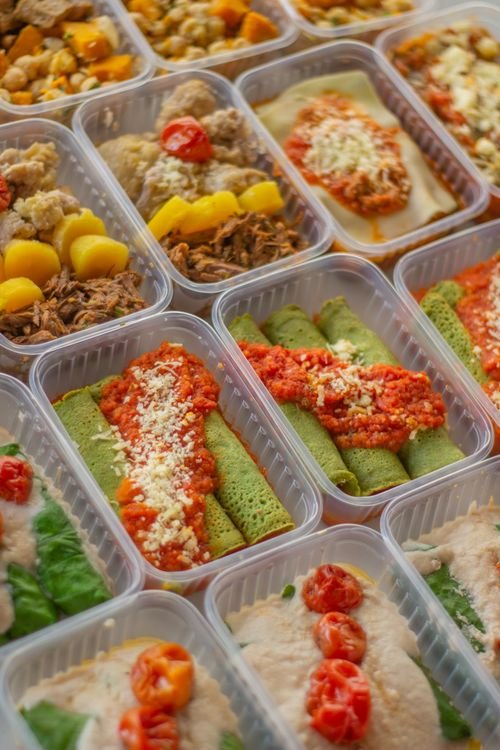
Preparing meals in advance makes hitting your macros much easier. Our guide to meal prep ideas for weight loss shows how to plan a week of balanced meals.
How to Track Macros Without Stress
Tracking can be useful, but it should not take over your life. A few practical tips:
- Track for two to four weeks first. That is long enough to learn what your usual meals contain, without making tracking a permanent chore.
- Use an app. Weighing food for a few weeks teaches you what portions look like. After that, many people can estimate by eye.
- Focus on protein first. If you only track one thing, make it protein — it is the macro most linked to feeling full.
- Do not chase perfection. Hitting your numbers exactly every day is not necessary. Being roughly in range most days is enough.
- Take breaks. If tracking starts to feel stressful or obsessive, stop for a while. Your relationship with food matters as much as the numbers.
Common Mistakes When Calculating Macros
- Setting calories too low: a very large deficit is hard to sustain and often leads to overeating later. Slow and steady works better.
- Cutting carbs or fat to zero: your body needs all three macros. Extreme restriction is rarely sustainable and can leave you tired and hungry.
- Forgetting drinks and snacks: a sweetened coffee or a handful of biscuits counts too. Include everything you eat and drink.
- Ignoring sleep and activity: poor sleep and low activity affect hunger and energy, which makes any macro plan harder to follow. Our guide on healthy sleep habits explains why rest matters for weight loss.
Do Macros Work Better Than Calories Alone?
For some people, yes. Counting only calories can lead to a diet of low-protein, low-fibre foods that leave you hungry. Paying attention to macros pushes you towards filling, balanced meals — which makes the calorie target easier to keep. For others, simple calorie awareness is enough. Neither approach is “correct” for everyone. The best method is the one you can follow for months, not days.
When to Ask a Professional
If you have diabetes, kidney disease, a history of eating disorders, or any other health condition, speak to a qualified healthcare professional or dietitian before changing your macros. They can help you set targets that are safe and realistic for you. The same applies if you are pregnant, breastfeeding, or under 18.
Conclusion
Calculating macros for weight loss is simpler than it sounds: work out a modest calorie target, split it between protein, carbs, and fat, and build your meals around those numbers. Protein deserves the most attention, because it keeps you full and protects your muscles. Track for a few weeks to learn your portions, then relax — being roughly in range most days is enough.
Macros are a tool, not a test. Use them to build balanced, satisfying meals, and let the numbers serve your life rather than rule it.
FAQs
What are macros for weight loss?
Macros are protein, carbohydrates, and fat — the three nutrients that provide energy. Calculating macros means deciding how much of each to eat per day, based on a calorie target that supports gradual weight loss.
What is a good macro split for weight loss?
A common starting point is 25–35% protein, 35–45% carbohydrates, and 25–35% fat. Adjust the split to what you can stick to — the best plan is one you can follow for months.
How much protein should I eat to lose weight?
General guides suggest roughly 1.2–1.6 grams of protein per kilogram of body weight per day, but this is a general range, not a prescription. If you have a health condition, ask a healthcare professional or dietitian for advice tailored to you.
Do I need to track macros forever?
No. Most people track for a few weeks to learn portion sizes, then estimate by eye. If tracking feels stressful, take a break — your relationship with food matters as much as the numbers.
Disclaimer: This article is for general wellness information only and is not medical advice. If you have a health condition, are pregnant or breastfeeding, or are under 18, please speak to a qualified healthcare professional or dietitian before changing your diet.