
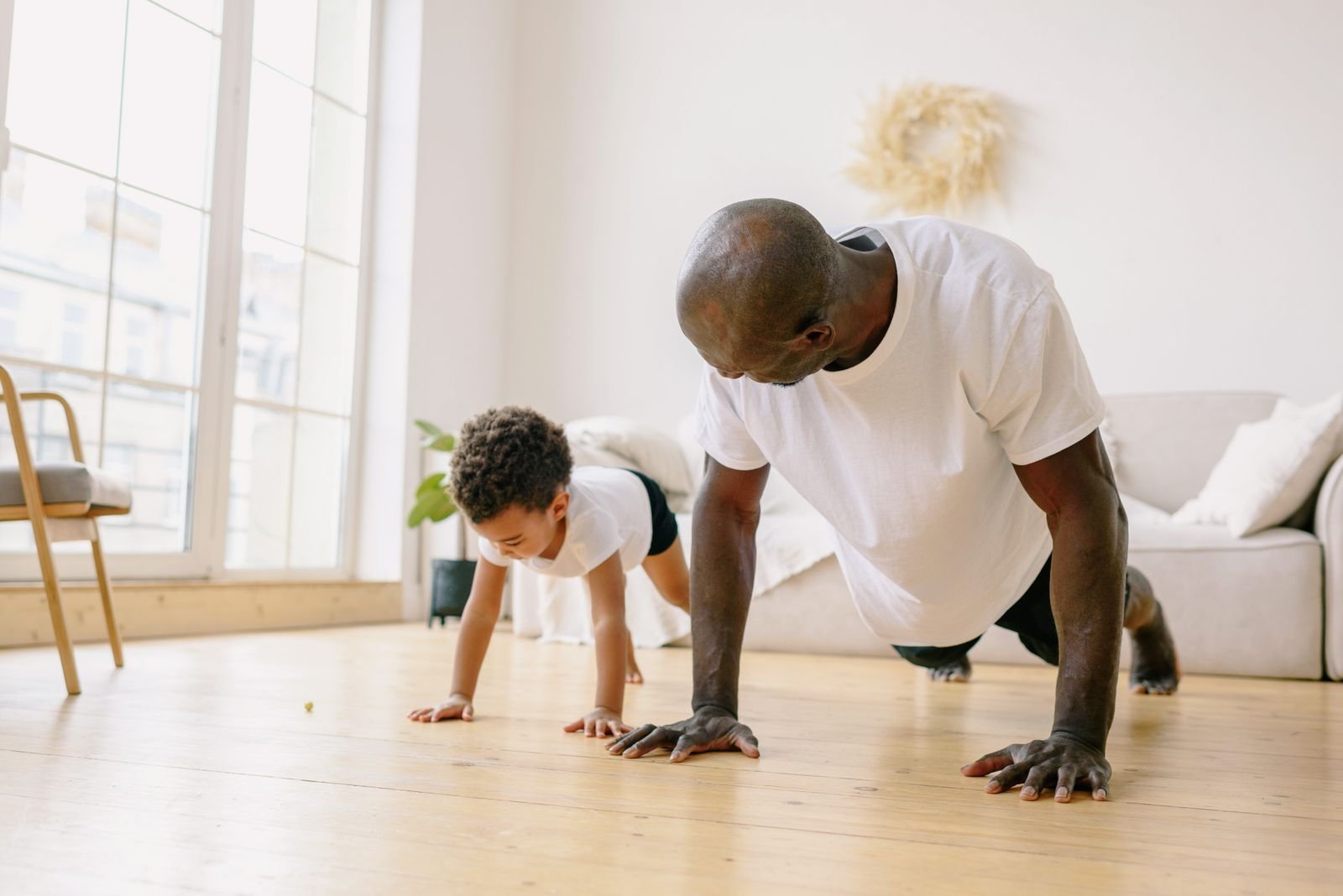
Between school runs, work, meals, laundry, and bedtime, finding time to exercise can feel impossible when you are a parent. The gym is a nice idea, but by the time you have driven there and back, the day is gone. That is why home workouts are such a good fit for busy parents: no travel, no membership, and no childcare needed — just a small patch of floor and a few minutes.
The secret is not finding an extra hour. It is using the minutes you already have, in a way that actually works. Here is how to build a home workout plan that fits real family life.
Why Home Workouts Work So Well for Parents
Home workouts remove the biggest barriers parents face. There is no commute, no need to arrange childcare, and no pressure to look a certain way. You can exercise in your pyjamas at 6 in the morning or in the ten minutes while dinner is in the oven.
They are also flexible in a way a gym class never is. If a child wakes up mid-workout, you can pause and come back. If you only have ten minutes today, ten minutes still counts. Research on habits is clear: short workouts done regularly beat long workouts that keep getting cancelled.
And there is a bonus most parents do not expect — when your children see you exercising, they start to think of movement as a normal part of life. That is a gift that lasts far longer than any single workout.
The Rules for Busy-Parent Workouts
Before the plans, a few ground rules that make everything else work:
- Keep it short. Aim for 10 to 30 minutes. Anything longer is a bonus, not a requirement.
- Keep it simple. Bodyweight exercises need no equipment and no setup. If you have to spend five minutes finding gear, you will not start.
- Schedule it like an appointment. Pick a time — before the kids wake up, during nap time, or after bedtime — and protect it.
- Start easier than you think. The first week should feel too easy. That is how you build a habit that sticks.
- Warm up gently. Two or three minutes of marching in place, arm circles, and gentle squats is enough before a home workout.
The 10-Minute Morning Plan
Perfect for before the kids wake up, or while the kettle boils. Do each exercise for 40 seconds, rest for 20 seconds, and go through the circuit twice.
The Circuit
- Marching in place — lift your knees high and swing your arms. Gets your blood moving gently.
- Bodyweight squats — feet shoulder-width apart, sit back as if into a chair, then stand tall.
- Wall push-ups — hands on a wall, body straight, bend your elbows and push back. Easier than floor push-ups and great for beginners.
- Standing knee raises — lift one knee towards your chest, then the other, keeping your tummy tight.
- Glute bridges — lie on your back, knees bent, lift your hips up and squeeze, then lower slowly.
Ten minutes, no equipment, and you have moved every major muscle group before breakfast. If you only ever do this one plan, it is still a genuine workout routine.
The 20-Minute Lunch-Break Plan
If you work from home or have a lunch break, twenty minutes is enough for a proper full-body session. Do the circuit three times, resting one minute between rounds.
The Circuit
- Squats — 12 reps, slow and controlled.
- Knee push-ups — 10 reps, keeping your body in a straight line from head to knees.
- Reverse lunges — 8 reps each leg, stepping back and bending both knees.
- Plank — hold for 20 to 30 seconds, breathing steadily.
- Superman pulls — lie face down, lift your chest and arms slightly, and squeeze your shoulder blades together, 10 reps.
This plan builds strength as well as fitness. To keep it interesting, add a rep or five seconds to one exercise each week. Small progress like that adds up fast. For more ideas on gentle strength moves you can do at home, our guide to best stretches for flexibility pairs well with this routine as a cool-down.
The 30-Minute Family Workout
This is the plan for when the kids are awake and want to join in. It is less about perfect form and more about moving together — and it counts as real exercise for everyone.
Make It a Game
- Dance party warm-up — put on three songs and dance around the living room. Children love this, and it is a genuine warm-up.
- Animal walks — bear crawl across the room, then frog jumps back. Kids find this hilarious and it works your arms, legs, and core.
- Balloon keepy-uppy — keep a balloon in the air using hands, feet, and heads. It gets everyone moving and laughing.
- Follow-the-leader circuit — take turns choosing an exercise: star jumps, squats, marching, or a plank. Each person leads for one minute.
- Stretching cool-down — finish with everyone lying on their backs, breathing slowly, and stretching their arms and legs out wide like starfish.
Thirty minutes of this burns energy, builds strength, and — just as importantly — gives you active time together instead of another half hour in front of a screen. If you want a calmer family activity for the evening, our guide to yoga poses for stress relief has gentle poses that children can do alongside you.
A Simple Weekly Plan
You do not need to do the same thing every day. Here is a week that balances effort and rest:
- Monday: 10-minute morning plan
- Tuesday: 20-minute lunch-break plan
- Wednesday: rest, or a gentle family walk — read why it helps in our article on the benefits of walking 30 minutes a day
- Thursday: 10-minute morning plan
- Friday: 20-minute lunch-break plan
- Saturday: 30-minute family workout
- Sunday: rest, or light stretching
That is about 90 minutes of movement a week, spread across short sessions you can actually keep. After two or three weeks, add a round to the circuits or a few extra reps.
Fitting Workouts Into a Packed Day
The hardest part is rarely the exercise — it is finding the moment. A few tricks that work for real parents:
- Anchor it to something you already do. Exercise right after your morning coffee, or right after the kids’ bedtime routine. Linking it to an existing habit makes it automatic.
- Use waiting time. While dinner cooks, do a set of squats and a plank. While the kids brush their teeth, do wall push-ups in the hallway.
- Keep your mat out. If your exercise mat is rolled up in a cupboard, you will not use it. Leave it in a corner of the living room where you can see it.
- Lower the bar on busy days. A five-minute stretch still counts. The goal is to keep the habit alive, not to be perfect.
- Involve the kids. Children as young as three can copy squats and star jumps. It turns your workout into playtime, and you stop needing to find time away from them.
Common Mistakes to Avoid
- Doing too much in week one. Starting with a hard hour-long session usually ends in sore muscles and a lost week. Start easy and build up.
- Skipping the warm-up. Cold muscles are more likely to complain. Two minutes of gentle movement first makes everything easier.
- Comparing yourself to others. Your only competition is last week’s version of you. A parent who does ten minutes three times a week is doing brilliantly.
- Waiting for the perfect time. There is no perfect week. A short workout today beats a perfect plan that starts “on Monday”.
Frequently Asked Questions
How many minutes of exercise do busy parents actually need?
Health guidelines suggest around 150 minutes of moderate activity a week for adults, but that can be broken into short chunks — even ten minutes at a time counts. Three 10-minute home sessions plus a couple of walks can get you most of the way there. Start where you are and build up gradually.
Can I work out with my kids in the room?
Yes — and it is often easier than trying to exercise alone. Young children can join in with simple moves like squats, star jumps, and animal walks, or play nearby while you do your circuit. It will not be a perfect, quiet workout, and that is completely fine.
Do I need equipment for home workouts?
No. Bodyweight exercises — squats, lunges, push-ups, planks, glute bridges — work every major muscle group with no gear at all. If you later want variety, a single resistance band or a pair of light dumbbells is a cheap addition, but they are never a requirement to start.
What if I miss a day?
Nothing bad happens. Missing a day is normal, especially with children. Just do the next session as planned instead of trying to “make up” for it with a double workout. Consistency over weeks matters far more than any single day.
Conclusion
You do not need a gym, an hour of free time, or a babysitter to stay active as a parent. You need a plan that fits the life you actually have: short sessions, simple exercises, and a little flexibility for the days when everything goes sideways.
Start with the 10-minute morning plan three times this week. That is all. Once it feels easy, add the 20-minute plan or a family workout at the weekend. Small, regular movement is how busy parents stay strong, energetic, and sane — one ten-minute session at a time.
Disclaimer: This article is for general information and wellness purposes only. It is not medical advice and is not intended to diagnose, treat, or prevent any health condition. If you have a health concern or a medical condition, please consult a qualified healthcare professional for personal advice.