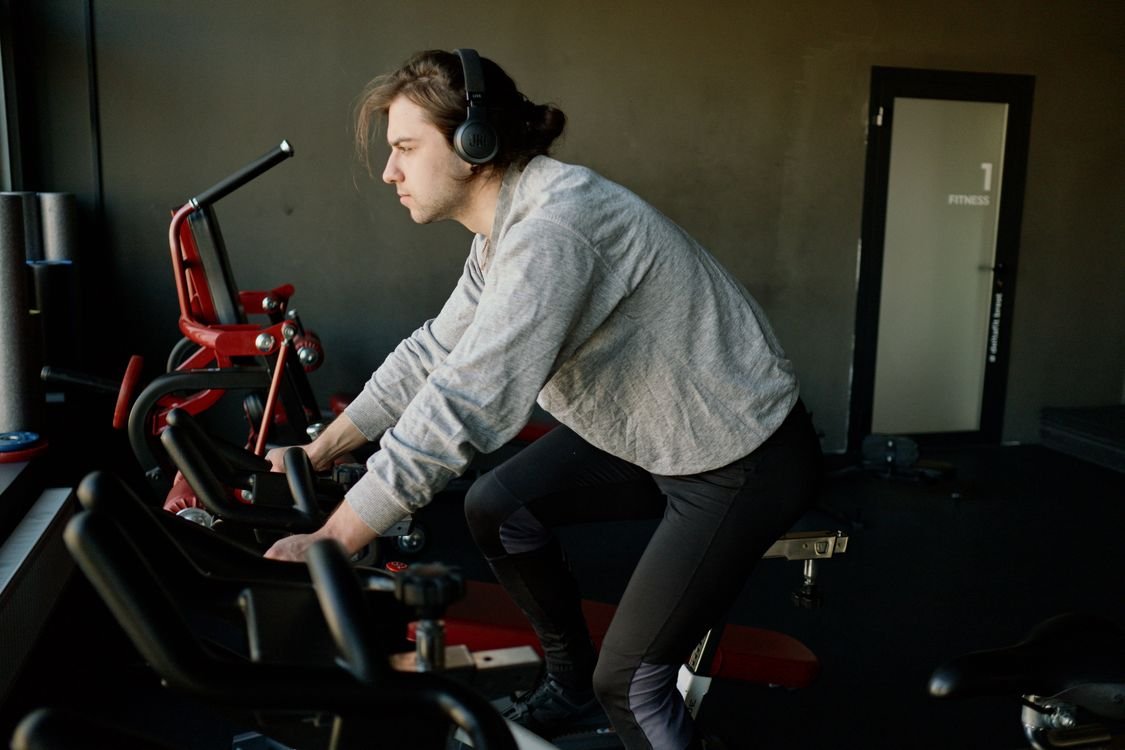
If you want exercise that is gentle on your joints, easy to start at home, and simple to fit into a busy day, a stationary bike is hard to beat. You need no perfect weather or gym membership — just a bike, a little space, and a routine you can stick with.
Stationary cycling raises your heart rate, burns calories, and builds leg endurance — and beginners can ease in slowly.
How Stationary Bike Exercise Supports Weight Loss
Weight loss comes down to a small, sustainable calorie deficit over time — using a little more energy than you take in. Exercise helps by burning calories and building a habit of moving regularly.
Cycling is low-impact, so it puts far less stress on your knees, hips, and ankles than running or jumping. That matters if you carry extra weight or are returning after a long break — you can still work hard without the jarring impact.
Regular cycling also strengthens your leg muscles — quadriceps, hamstrings, glutes, and calves. Stronger legs make everyday movement easier and help you pedal longer as fitness grows. Cycling’s real value is that it is approachable enough to do often, and consistency supports gradual change. For a broader comparison, see our guide to the best exercise for weight loss.
Getting Your Bike Set Up Properly
A well-adjusted bike feels comfortable and helps you avoid the aches that put beginners off.
Seat Height
Set the seat roughly at hip height. When you sit and place your foot on the pedal at its lowest point, your knee should have a slight bend. If your hips rock as you pedal, the seat is too high; if your knees feel cramped, it is too low.
Seat Distance and Handlebars
Slide the seat so that, with the pedals level, your front knee sits above the ball of your foot. Reach the handlebars with a slight bend in your elbows, without hunching. Beginners usually prefer handlebars at about seat height or a little above.
Footwear
Comfortable trainers with a firm sole work well — no special cycling shoes needed. Avoid loose footwear, and tuck laces in so they cannot catch in the pedals.
A Beginner-Friendly Routine
The best routine is the one you can repeat. Start gently and build gradually.
Weeks 1–2: Build the Habit
Aim for three rides a week, each 15 to 20 minutes at an easy pace, when you can still talk in short sentences. Keep resistance low to moderate. The goal is simply to show up regularly and get comfortable.
Weeks 3–4: Add a Little Time
Stretch rides to 25 to 30 minutes, three or four times a week. Add a little resistance, or pedal faster for a minute or two, then ease back. When the same ride feels easier than in week one, your fitness is improving.
Week 5 and Beyond: Find Your Rhythm
Once 30-minute rides feel comfortable, add a fourth or fifth session, extend rides toward 40 minutes, or try the intervals below. Increase only one thing at a time — duration, frequency, or intensity — and keep a rest day between harder sessions.
Interval-Style Rides for a Bigger Challenge
After a few weeks of steady riding, intervals can add variety and help you work harder in less time. Alternate short bursts of harder effort with easy pedalling to recover.
Try this: warm up for five minutes, then repeat six rounds of one minute of harder pedalling followed by two minutes easy. Finish with a five-minute cool-down. The session takes about 30 minutes, and hard minutes should feel challenging but not desperate — around seven out of ten effort. As you get fitter, lengthen the hard intervals or add a round. You can read more about this style in our fitness tabata workout guide.
How Long and How Often Should You Ride?
A helpful target for general health is around 150 minutes of moderate activity a week — for example, five 30-minute rides. Build up gradually; shorter rides count, and three 10-minute rides in a day still add up.
For weight loss, consistency matters more than any one session’s length. Riding 30 minutes four times a week, every week, usually brings steadier progress than one exhausting two-hour ride followed by ten days off. Find a regular slot — before breakfast, at lunch, or while watching a show — so riding becomes routine.
Proper Form on the Bike
Keep your core gently engaged, shoulders relaxed, and back straight rather than rounded. Rest your hands lightly on the handlebars instead of gripping tightly. Pedal in smooth circles, knees pointing forward in line with your feet. Avoid bouncing in the saddle; if you bounce, ease off the speed or add resistance. And breathe steadily — many beginners hold their breath during hard efforts without noticing.
Common Mistakes to Avoid
- Starting too hard. Begin easy, finish feeling like you could have done a little more, and let your fitness grow week by week.
- Skipping the warm-up and cool-down. Five easy minutes at the start and end of each ride makes a real difference.
- Riding with the wrong seat height. A seat that is too low strains the knees; one that is too high makes your hips rock and your lower back ache.
- Relying on resistance alone. Very high resistance at a slow grind is hard on the knees. Moderate resistance with a steady pace usually works better.
- Forgetting to drink water. You will sweat, even indoors. Keep a water bottle within reach and sip regularly.
- Expecting overnight results. Weight changes slowly. Improved energy, better sleep, and looser clothes are all signs of progress worth noticing.
Pairing Cycling with Healthy Eating
Exercise and eating work best as a team. Cycling burns calories and builds fitness, while balanced eating keeps the energy balance that supports gradual weight loss. Focus on the basics: vegetables and fruit, whole grains, lean protein, healthy fats, and water as your main drink.
Beware the common trap of rewarding a workout with a large treat — it is easy to eat back the calories you burned, especially with sugary drinks and snacks. For practical ideas on eating well, our guide to healthy eating is a good place to start.
Frequently Asked Questions
Is a stationary bike good for weight loss?
Yes, it can be a helpful part of a weight loss plan. Stationary cycling burns calories, improves fitness, and strengthens your legs, all with low impact on your joints. It works best alongside balanced eating and a regular routine, and gradual progress over weeks and months is normal.
How many minutes a day should I ride a stationary bike to lose weight?
Start with 20 to 30 minutes, three to five times a week, and build toward around 150 minutes of moderate activity per week. Shorter rides still count. The key is a routine you can repeat week after week.
Is it better to ride fast or use high resistance?
A mix of both works well. Moderate resistance with a steady, comfortable pace is a good default, while occasional intervals add variety and challenge. Very high resistance at a slow grind can strain your knees, so focus on smooth pedalling at a pace you can sustain.
Can I use a stationary bike every day?
Many people ride most days, but daily intense sessions are not necessary and can lead to tiredness or overuse aches. A balanced week includes steady rides, one or two harder sessions, and at least one rest day. If you ride daily, keep some rides short and easy.
Conclusion
Stationary cycling is a practical, joint-friendly choice that fits easily into life at home. It burns calories, builds leg strength and endurance, and it is exercise many people can enjoy and repeat. Start with short, easy rides, set your bike up properly, add time and variety gradually, and pair cycling with balanced eating and good sleep. You do not need to be fast or perfect — just keep showing up.
Disclaimer: This article is for general wellness information only and is not medical advice. Please check with a healthcare professional before starting a new exercise routine, especially if you have a health condition, an injury, or concerns about exercising safely.