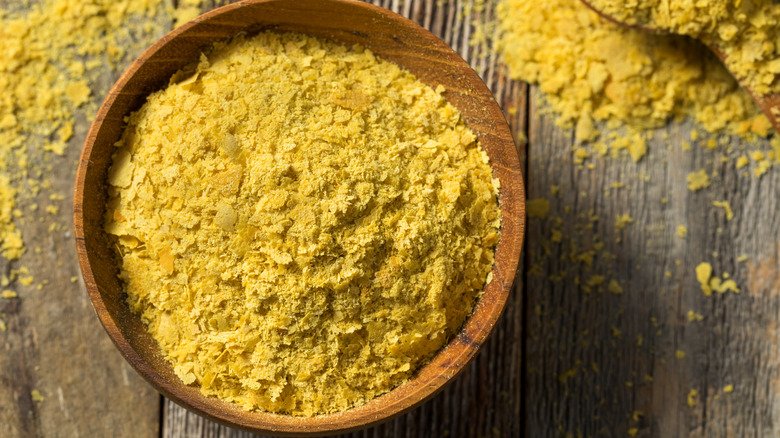
If you have ever wondered how a spoonful of golden flakes can turn plain popcorn savoury and cheesy, you have probably met nutritional yeast. It is a pantry staple in plant-based kitchens, yet many people have never tried it.
Nutritional yeast is a deactivated yeast, usually sold as small yellow flakes or a fine powder, with a naturally savoury, slightly nutty flavour. It is often called “nooch” by people who cook with it regularly, and it brings useful nutrients to everyday meals with very little effort.
What Is Nutritional Yeast?
Nutritional yeast is made from Saccharomyces cerevisiae, a single-celled fungus also used in baking and brewing. It is grown on a sugary food source such as molasses, then harvested and dried with heat. Drying deactivates the yeast, so it can no longer ferment or make dough rise. What is left is a dry, flaky ingredient, ready to sprinkle or stir into meals.
You will find it in the health food aisle, sold in tubs, bags, or shaker jars.
How Nutritional Yeast Differs from Baker’s and Brewer’s Yeast
All three come from the same species of yeast, but they are not interchangeable.
Baker’s yeast is the active yeast used to make bread rise. It is alive and ferments sugars, producing gas that lifts dough, and it would taste bitter and unpleasant in place of nutritional yeast.
Brewer’s yeast is a by-product of beer making. It is also deactivated, but it tastes much stronger and more bitter, and it is usually sold as a supplement rather than a cooking ingredient.
Nutritional yeast, by contrast, is grown specifically as a food. It is deactivated, so it will not ferment anything, but it is milder and more pleasant in flavour — which is why it works so well in cooking.
What Nutrients Does Nutritional Yeast Provide?
A small serving adds a useful mix of nutrients. It naturally contains B vitamins, including thiamine, riboflavin, niacin, and vitamin B6, which help turn food into energy and support normal body function. Many brands also fortify it with vitamin B12, which is worth knowing about because B12 is not naturally found in plant foods in meaningful amounts — check the label.
It also provides protein, including the full range of essential amino acids, which is unusual for a single plant food, plus dietary fibre, which supports healthy digestion and helps you feel satisfied after a meal. It is naturally low in fat and free from sugar, and most varieties are gluten-free and suitable for vegan diets. Learning to read a nutrition facts label can help you compare brands.
The Main Benefits of Nutritional Yeast
One of the biggest benefits is how easily it fits into a healthy diet. It adds flavour and nutrients without much fat, sugar, or salt — a simple way for people who eat mostly plants to add protein and B vitamins to their meals.
Its savoury flavour is another benefit. It brings a cheesy, umami quality to food without any cheese, which makes it popular with people who avoid dairy. A spoonful can make a plain vegetable dish or a bowl of grains feel more complete.
It is also very convenient: no cooking or preparation, and a tub keeps in the cupboard for months. That ease matters on busy weeknights — it makes healthy eating simpler.
What Does Nutritional Yeast Taste Like?
Nutritional yeast tastes savoury, nutty, and mildly cheesy — often compared to parmesan, but softer and less sharp — with a rich, umami quality like toasted nuts or a well-seasoned broth.
The light flakes dissolve easily in hot food or a sauce, and sit like a seasoning on cold food. The flavour is noticeable but not overpowering, so a small amount goes a long way.
Start with a small amount over something you already enjoy to see whether it suits you.
Easy Ways to Use Nutritional Yeast
Sprinkle it on popcorn — the classic first use. Warm popcorn, a little oil, and a generous spoonful taste like cheese popcorn without any cheese at all.
Toss it through hot pasta with olive oil, garlic, and black pepper, or blend it into a creamy sauce made from soaked cashews or plant milk.
Add it to soups and stews. A spoonful deepens the flavour of a vegetable soup or bean stew, much like a stock cube — only with extra nutrients.
Sprinkle it on salads and roasted vegetables. Over a green salad, roasted potatoes, or steamed broccoli, it gives plain vegetables a cheesy, nutty finish.
Blend it into sauces and dressings. It is a key ingredient in many dairy-free cheese sauces and gives salad dressings a richer flavour. Adding it to your healthy meal planning list means you will always have it ready.
Who Should Be Cautious with Nutritional Yeast?
Most people can enjoy it without any problem, but a few people should be cautious or check with a healthcare professional first.
If you are sensitive to yeast or have been told to avoid yeast-containing foods, nutritional yeast may not suit you. People with certain medical conditions, including some digestive conditions, may also need to be careful.
Because some fortified varieties contain added B vitamins, including B12, people who take medication or manage a medical condition should check with a healthcare professional before adding large amounts regularly. Pregnant or breastfeeding women, and anyone feeding young children, should also check first.
If you try it and notice discomfort, such as bloating or an upset stomach, stop using it and talk to a healthcare professional.
How to Choose and Store Nutritional Yeast
Look for a product that lists Saccharomyces cerevisiae as the only ingredient, apart from any added vitamins if it is fortified. Some brands add extra flavourings, so check the label if you prefer a plain product.
Flakes are best for sprinkling, while powder blends more smoothly into sauces and dressings. Both taste the same; only the texture differs.
Store it in a cool, dry place, away from direct sunlight, with the lid tightly closed. An airtight container in the cupboard is ideal, and it will keep for several months. Avoid the fridge, where moisture can make it clump, and always use a dry spoon.
Frequently Asked Questions
Is nutritional yeast the same as the yeast used in baking?
No. Baker’s yeast is alive and active — it ferments and makes bread rise. Nutritional yeast is deactivated by heat, so it cannot ferment or make dough rise, and it has a mild, cheesy flavour that baker’s yeast does not have.
Is nutritional yeast a good source of vitamin B12?
Some varieties are fortified with vitamin B12, which can help people who eat mostly plant-based foods. But not all nutritional yeast contains B12, so check the label — unfortified varieties do not provide it in meaningful amounts.
Can I use nutritional yeast if I am lactose intolerant or vegan?
Yes. It contains no dairy, lactose, or animal products, so it suits people who are lactose intolerant and vegans, and its cheesy flavour makes it popular in dairy-free cooking. For more plant-based ideas, see our guide to foods that boost metabolism.
How much nutritional yeast should I use in a recipe?
It depends on the dish. A good starting point is one to two tablespoons per serving, sprinkled over food or stirred into a sauce. Add a little more for a stronger cheesy flavour, or less if you prefer it subtle — it is best to start small and taste as you go.
Conclusion
Nutritional yeast is a small ingredient with a lot to offer. It brings B vitamins, protein, and fibre to your meals, adds a savoury, cheesy flavour without dairy, and works in almost any dish — from popcorn and pasta to soups, salads, and sauces.
If you have never tried it, start with a spoonful over popcorn or pasta. It may become one of those quiet staples in your kitchen — the kind of ingredient you reach for without thinking, because it makes good food taste even better.
Disclaimer: This article is for general wellness information only, not medical advice. If you have a medical condition or take medication, please speak to a healthcare professional before changing your diet.