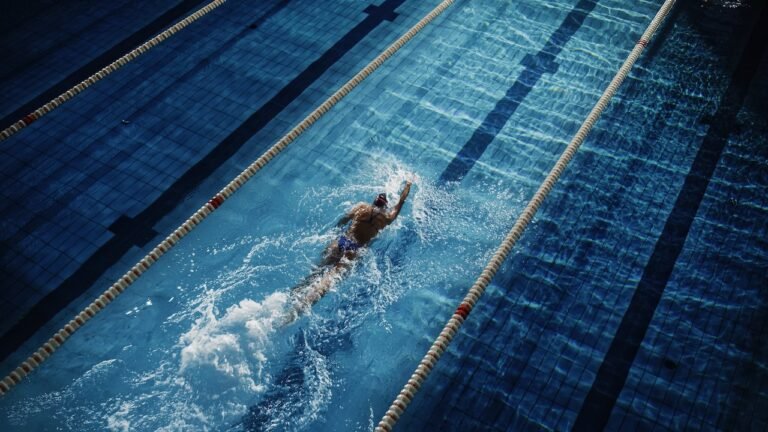
If running leaves your knees aching and the gym feels repetitive, the swimming pool might be the answer. Swimming works your whole body while feeling gentle and enjoyable — and it can be a great partner in a weight loss journey.
You do not need to be a fast or confident swimmer to start. Begin with short, slow sessions and build up gradually — the water supports your body, sparing your joints the pounding of running on hard ground.
Why Swimming Helps with Weight Loss
Swimming works against water resistance in every direction, so almost every part of your body is involved in each stroke — arms pull, legs kick, and your core keeps you steady. That full-body effort burns a meaningful amount of energy while building strength and stamina.
Water resistance also sets swimming apart: you push against water with every movement, which tones muscles in the arms, shoulders, back, legs and core — and stronger muscles support your metabolism.
It is also low impact: the water supports most of your body weight, so your knees, ankles and hips take far less strain than during running or jumping. That makes swimming a friendly option if you carry extra weight or joint discomfort has put you off other workouts. If you are weighing up options, our guide on the best exercise for weight loss compares swimming with other popular choices.
Getting Started: What You Need
You need little to start: a comfortable swimsuit, goggles that fit well and do not leak, and a towel. A swim cap is optional but useful if you have long hair.
Most pools have lanes for slow, medium and fast swimmers — choose the slow lane while you are learning, and stay to the right so faster swimmers can pass. Start in the shallow end until you feel comfortable.
Shower before you get in, avoid blocking the end of the lane, and let faster swimmers pass.
Safety comes first. If you are not a confident swimmer, stay where you can stand up easily and consider a few adult swim lessons first. Never swim alone if you are unsure of your ability, and always swim where a lifeguard is on duty.
Beginner Workout 1: A Simple 20–30 Minute Interval-Style Session
Interval swimming means alternating short bursts of effort with rest or easy swimming — a great way to build fitness without getting exhausted in the first five minutes.
Warm up with five minutes of easy swimming or walking in the shallow end. Then swim one length at a steady pace, rest for 30 seconds at the wall, and repeat, aiming for eight to ten lengths in total. As your fitness improves, shorten the rests or add a length each week. Finish with five minutes of slow swimming to cool down.
Beginner Workout 2: A Steady Swim Session
Steady swimming means swimming at a relaxed, even pace without stopping. It suits days when you want a calmer workout, or when you are building endurance.
Start with ten minutes of continuous easy swimming with your most comfortable stroke. Rest a minute or two at the wall, then go again for five to ten minutes. Over the coming weeks, stretch the time further — fifteen minutes, then twenty, then thirty.
Beginner Workout 3: A Mixed-Stroke Session
Once you can swim for ten or fifteen minutes, mixing strokes keeps things interesting and works different muscles. Warm up with four gentle lengths, then swim two of breaststroke, two of backstroke, and two of front crawl at an easy pace, resting briefly at the wall between pairs.
If you only know one stroke, vary the pace instead — one length faster, the next slower. For another low-impact option to alternate with swimming days, our guide on stationary bike exercise for weight loss shows how cycling can fit into the same weekly routine.
Strokes and How They Differ in Effort
Front crawl is the fastest stroke and often the most tiring at first, as it demands steady breathing and a continuous kick.
Breaststroke is slower and more relaxed, with a glide between strokes that gives you a moment to breathe. It is often the easiest stroke for beginners.
Backstroke lets you breathe freely because your face stays out of the water, which many beginners find reassuring. Butterfly is the most demanding stroke and is best left until you are comfortable with the others.
How Often to Swim in a Week
For most beginners, two to three swims a week is a good starting point, giving your body time to recover while still building fitness. A simple week might be two pool sessions of 20 to 30 minutes each, plus a walk on a different day.
As your stamina grows, add a third or fourth session or stretch your swims longer. Mild muscle tiredness the day after is normal, but soreness lasting several days is a sign to rest. Consistency matters more than intensity — three easy swims a week beats one exhausting session followed by a fortnight off. If you enjoy high-intensity training on dry land too, our fitness Tabata workout guide is a good complement to your pool days.
Combining Swimming with Healthy Eating
Exercise is only half the weight loss picture — what you eat matters just as much. Swimming can make you hungry, so plan meals around your sessions rather than reaching for the nearest snack afterwards.
Eat a light snack an hour or two before you swim, such as fruit with yoghurt or a small sandwich. After your swim, a meal with protein and vegetables helps your muscles recover and keeps you full. Drink water before and after your session too.
Small, sustainable changes work best: cooking at home more often, choosing whole foods over highly processed ones, and keeping portions sensible. On rest days, walking 30 minutes a day keeps you moving without extra effort.
Common Beginner Mistakes
Holding your breath is the most common mistake. Many beginners forget to exhale underwater, which leaves them gasping. Breathe out slowly while your face is in the water, then lift your head briefly to breathe in.
Kicking too hard is another. Big, frantic kicks tire your legs quickly without making you faster. Keep your kick small, steady and relaxed.
Swimming with your head too high is also common. Looking forward lifts your hips and legs, creating drag. Keep your head in line with your spine and look down at the bottom of the pool.
Finally, many beginners try to do too much too soon. A long first session that leaves you exhausted can put you off coming back. Start short and build up gradually.
Frequently Asked Questions
How long should a beginner swim for weight loss?
Start with 20 to 30 minutes per session, two or three times a week, including rest breaks at the wall. As your fitness improves, swim longer or add a session.
Is swimming better than running for weight loss?
Both can support weight loss — the best choice is the one you enjoy enough to keep doing. Swimming is low impact, so it is easier on your joints and works your whole body. Running may feel more intense, but it carries a higher risk of joint strain.
Do I need to be a good swimmer to start?
No. You need to be comfortable and safe in the water and able to swim a short distance, but you do not need good technique or speed. Adult swim lessons can help if you are unsure.
Will swimming alone help me lose weight?
Swimming supports weight loss by burning energy, building muscle and improving fitness, but it works best alongside balanced eating and an active lifestyle.
Conclusion
Swimming is one of the most beginner-friendly ways to move towards a healthier weight. It works your whole body, goes easy on your joints, and suits any fitness level.
The most important step is getting into the pool regularly. Pick two or three days a week, keep sessions enjoyable, pair them with balanced eating, and give yourself time. Progress comes from showing up again and again.
Disclaimer: This article is for general wellness information only, not medical advice. If you have a health condition, please speak to a healthcare professional before starting a new exercise routine.